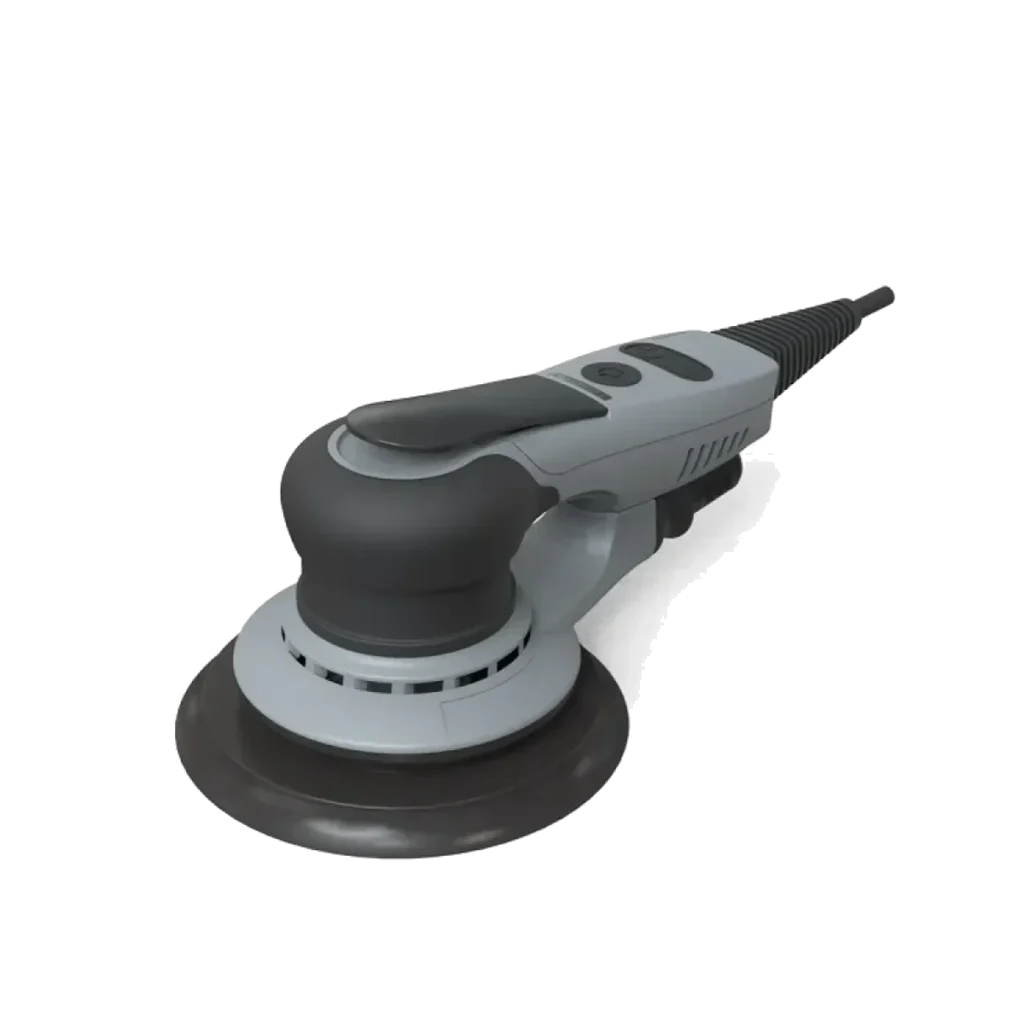
FineBuff manufactures car polishers in its own factory for brands, distributors and professional tool suppliers. Start with a machine from our range, define the complete kit and discuss the product logo and packaging requirements for your market.
Our OEM car polisher enquiries cover model selection, customer logos, sample arrangements and written order specifications. Requests for housing colours, components or other development work are reviewed separately for the selected model.
Whether you are launching a first branded tool or adding a polisher to an established range, a useful project starts with a clear customer offer: who will use the machine, which tasks it should cover and what the buyer will receive in the box. That brief helps turn a broad sourcing enquiry into a configuration that can be sampled and quoted.
Working area, available drive modes, adapters and approved small-pad systems
Cordless describes the power source; it does not identify the drive mechanism. Include both when specifying a cordless model.
For a distributor serving fixed workshops, the initial brief might prioritise a core machine, a compatible pad selection and clear replacement-part information. A range for mobile detailers may place more emphasis on the supplied battery kit, charger input and working weight. A retail offer also needs consistent photography, instructions and box contents so customers can understand exactly what they are buying.
These are range-planning questions, rather than assumptions about any one model. Describe the intended use first, then compare the available configurations against it.
Set the Scope of Your OEM or Private-Label Project
Buyers use OEM, ODM and private label in different ways. The practical question is which parts of the product and presentation will change.
A project based on an existing machine with customer branding is different from a request involving a revised housing, electronics or drive system. List those requests separately so that sample preparation, development work and commercial conditions can be discussed on the same basis.
Project area
Information to include in the brief
Base machine
Product URL or model reference, intended use and destination market
Customer branding
Artwork file, requested position and marking requirements
Packaging and instructions
Box format, artwork, manual language and required labels
Customer-ready kit
Each proposed pad, plate, handle, battery, charger, case or other item
Product development
The specific component or design change and its intended purpose
FineBuff reviews the proposed scope for the selected product. A clear brief gives both parties a record of what is included, what remains under review and what needs separate approval.
Define Your Logo and Packaging Requirements
Customer logos can be applied to FineBuff products, with additional costs confirmed for each project. Send the selected model and your artwork so we can discuss the marking position and available method.
For a private-label car polisher enquiry, identify the requested changes separately:
Product logo and marking position.
Labels, manual language and retail-box artwork.
Supplied accessories, case and kit presentation.
Housing colour, component changes or other development requests.
The available scope, approval process and quotation depend on the model and changes requested. An approved logo layout does not by itself approve a new component or machine configuration.
Provide vector artwork where available, along with dimensions and colour references. Identify whether a colour request concerns the product housing, a printed label or the retail packaging. A photograph of another brand’s finished tool can illustrate a preference, but it does not replace your own artwork or an agreed production specification.
Separate retail-box requirements from shipping-carton requirements. The retail box presents the product to the customer; the outer carton defines how the packed kits are grouped and handled. Confirm the printed information, kit count and packing details for each before order approval.
Build the Machine and Pad Set Together
Choose the polishing machine and its approved accessory system as one sellable kit. Our range includes polishing pads and backing plates for accessory enquiries alongside the machine.
Specify cutting, polishing and finishing pad requirements, then confirm their dimensions and compatibility with the selected tool. Record the exact kit contents in the quotation and packing list so that your sample, product photography and production order describe the same offer.
Distinguish a bare machine from a ready-to-sell kit when comparing prices. For a cordless offer, record whether batteries and a charger are included, and identify the approved combinations. For a corded offer, include the electrical configuration and supplied accessories. Similar product photographs can otherwise conceal meaningful differences in the quotation.
Pad diameter, backing-plate diameter and orbit are separate specifications. Record each relevant dimension and mounting detail; a shared nominal size alone does not establish compatibility. A concise kit specification makes repeat purchasing and customer support easier to organise.
From Enquiry to an Approved Order
Send the project brief. Include the model or product URL, destination country, estimated quantity and requested branding.
Review the proposed configuration. Identify the machine, electrical configuration, accessories and packaging to be quoted.
Agree the sample arrangement. Review the sample and freight terms, then evaluate the proposed kit for your intended application.
Approve the order specification. Confirm artwork, packing list, applicable documents and commercial terms in writing.
Our usual machine MOQ is 300 pieces; smaller batches may also be available. Ask for the quantity and pricing applicable to your selected configuration.
Samples for confirming batch orders can be supplied with freight collect. The usual payment arrangement is 30% in advance and 70% after receipt of the bill of lading. The written terms agreed for your order apply.
Review the Sample Against a Written Brief
Use a sample review to answer the questions that matter to your customer offer. Check handling, control access, the approved accessory fit, kit contents and the information supplied with the tool. For cordless products, assess the intended battery configuration rather than judging a bare machine alone.
When evaluating polishing results, record the surface, pad, compound, settings and operating conditions. A useful comparison explains what was tested; a short demonstration on a different accessory system may not represent the configuration you plan to sell.
Keep a dated record of accepted features and requested corrections. Identify any difference between the sample and the proposed production specification, including packaging or artwork still under development. Resolve those differences before treating the sample as the reference for an order.
Understand What Your Quotation Includes
Compare quotations for the same configuration and delivery scope. The base machine, included accessories, battery kit, requested branding, packaging and order quantity can all change what a price covers.
Your commercial review should identify:
The selected model and complete packing list.
The quantity and price basis for that configuration.
Branding, packaging or development items included in the offer.
Sample charges and freight arrangements where applicable.
Delivery terms, named place, payment terms and quotation validity.
The milestones used to establish the agreed production schedule.
A lead-time statement needs a defined starting point, such as an agreed approval milestone. Ask for the sequence applicable to your project so that artwork preparation, sample review and production are planned together. FineBuff confirms the applicable conditions in the written quotation and order agreement.
Prepare the Information for Your Market
Tell us where the products will be sold so that the quotation can identify the relevant voltage, frequency, plug, labels and manual language. For cordless kits, include the approved battery and charger combination in the document review.
Request the current specification, packing list, instructions and available model-specific documents through our quality and documentation enquiry page. Review them against the actual configuration and destination requirements before approving the order.
Retain the approved specification, artwork revision and packing list as a single order reference. For a repeat purchase, identify any proposed change to the machine, accessories, labels or packaging before approving the new order.
Discuss replacement-part availability and the applicable warranty or claim arrangements for the selected model. For cordless ranges, include battery and charger support in that conversation. These details help a brand or distributor plan the product beyond its initial launch, with responsibilities recorded in the agreed commercial terms.
OEM Car Polisher Questions
Does FineBuff manufacture its products?
Yes. FineBuff products are manufactured in our own factory. Our About page explains our manufacturing role and product focus.
Can I put my logo on a car polisher?
Customer logos can be applied to products. Send the model and artwork to discuss the available marking method, position and additional cost.
What is the minimum order quantity?
The usual machine MOQ is 300 pieces, and smaller batches may also be available. Confirm the terms for the model, branding and packaging you need.
Can I review a sample before a batch order?
Samples for confirming batch orders can be supplied with freight collect. Agree the sample configuration and applicable terms with the team.
Can I request a different colour or a custom kit?
Yes, you can submit those requirements for review. Housing colours, components, packaging and kit changes need a project-specific assessment and quotation before they become part of the order specification.
What should I send to get a useful quotation?
Send the model or product link, destination country, estimated quantity, requested logo or packaging changes and the items you want supplied in the kit.
Does one MOQ apply to every branding request?
Do not assume that the same conditions cover an existing configuration, different packaging and a component-development request. The usual machine MOQ is a starting point for discussion; ask for the terms attached to your specific project.
Can a battery or backing plate be chosen only by its stated size?
No. Battery compatibility involves the approved tool and charger system, while a backing plate also needs the correct mounting and machine approval. Include the exact components in the proposed kit specification.
Start Your OEM Car Polisher Enquiry
Tell us what you want to sell and where it will be used. Include your selected model, destination market, estimated quantity and branding brief so we can discuss the configuration and quotation.
Choosing between a corded and cordless car polisher means choosing how the tool will be powered throughout the working day. For a distributor, that decision also affects kit contents, replacement stock, shipping requirements and after-sales support.
A corded model can suit a fixed workshop with suitable power access and longer polishing sessions. A cordless model can suit mobile work or situations where cable routing is inconvenient. The better purchase depends on the complete workflow: corded tools need appropriate electrical access, while cordless tools need a workable battery and charging plan.
Compare the complete supplied kit
Two similar prices may cover very different products. One quotation may be for a bare cordless tool, while another includes batteries, a charger and a carrying case. A corded kit may include a different backing plate, pad or handle.
Ask for a line-by-line packing list before comparing prices. Identify the tool, approved plate, pads, battery quantity and capacity, charger, cable or plug, case and manual. Photographs help describe a product but should not replace the agreed packing specification.
Buying consideration
Corded polisher
Cordless polisher
Power access
Requires a suitable supply and cable routing
Requires charged, compatible batteries
Longer sessions
Does not require battery changes; operating limits still apply
Depends on battery supply, charging and operating limits
Handling
Assess cable movement and reach
Assess balance with the supplied battery fitted
Localisation
Voltage, frequency, plug and instructions
Battery platform, charger input, plug and instructions
Replacement stock
Relevant cables, switches and service parts
Approved batteries, chargers and tool service parts
Shipping review
Electrical product and accessory requirements
Those requirements plus applicable lithium battery transport rules
When corded tools fit the workflow
Corded machines are worth considering for workshops with organised working bays and access to the correct power supply. They avoid pauses caused specifically by depleted batteries, although that does not mean a tool is approved for unrestricted continuous operation.
Check cable length, cable flexibility and the position of the connection during normal use. Confirm the rated voltage, frequency and plug for the destination market. A travel adapter does not convert a machine's operating voltage or establish that it meets local requirements.
Include the full tool-and-accessory system in sample evaluation. Nameplate input power is electrical consumption, not a direct statement of pad output or correction performance.
When cordless tools fit the workflow
Cordless polishers can reduce cable management around a vehicle and support work away from a convenient outlet. Those advantages are most useful when the battery kit matches how the customer actually works.
Evaluate the machine with its intended battery fitted. A bare-tool weight does not represent the weight or balance the operator will experience. Check access to the battery release, switch and speed controls while holding the tool normally.
Also define the battery platform precisely. Similar-looking packs and matching voltage labels do not establish compatibility. Buyers should obtain the approved battery and charger combinations for the exact model rather than assume interchangeability across brands or product families.
The FineBuff Cordless DA Polisher is listed as a 20V platform. Request its current battery, charger and kit details before using that listing to prepare a customer offer.
Evaluate runtime and charging as a system
A runtime claim is useful only when its conditions are clear. Pad size, speed setting, applied load, surface, battery condition and temperature can all affect the result. A no-load demonstration is not a reliable description of a full polishing session.
Ask the supplier to specify the battery used, the operating conditions and the endpoint for any runtime figure. Confirm how charging time is measured as well. A charging arrangement that works for occasional use may not keep up with a busy workshop.
For battery energy comparisons, watt-hours are approximately nominal voltage multiplied by amp-hours. Use nominal voltage, not an unqualified marketing maximum. Even an accurate watt-hour comparison does not by itself predict tool runtime because the machines may draw different power under load.
Calculate ownership and support costs
For a cordless range, budget for the approved spare batteries and chargers customers are likely to need. Check replacement availability, warranty terms and procedures for handling battery-related problems before launch.
For a corded range, include the appropriate local electrical configuration, service arrangements and accessories. Compare complete customer-ready offers rather than bare tool prices.
If lithium batteries are included, confirm the transport requirements with the supplier and carrier for the intended shipping method and destination. Ask for applicable documentation, including the UN 38.3 test summary for the supplied battery type. Documentation must match the actual goods being shipped.
Common buyer questions
Is cordless always less powerful?
No. Power source alone does not establish performance. Compare specific models under representative working conditions using their approved systems.
Does a larger battery always solve runtime concerns?
It may add available energy, but compatibility, weight, balance and charging capacity still need evaluation. Use only battery options approved for the tool.
Is corded always cheaper?
Not in every market or kit configuration. Compare delivered, customer-ready kits and their expected support requirements.
Choose an 8mm, 15mm or 21mm DA polisher by matching the complete machine, approved pad system and orbit clearance to the panels you work on; a larger orbit does not guarantee faster or safer paint correction.
8mm, 15mm and 21mm: a practical comparison
The orbit values below come from the linked FineBuff product listings. The suggested evaluation areas are selection guidance, not measured performance results or a ranking of the machines. Confirm the current specification before ordering.
A long-throw candidate for broad, accessible panels. Check the complete pad movement near contours and trim.
Working clearance, approved plate and pad, contact on curves and handling under the intended conditions.
What orbit size means
Orbit is the diameter of the path traced by the centre of the backing plate as it moves around its eccentric axis. Backing plate diameter and polishing pad diameter describe different dimensions. Record them separately when comparing machines or buying accessories.
An “8mm polisher” is therefore not automatically a mini tool. A short-throw machine may still have a full-size head and pad. Conversely, a longer throw needs room for its movement as well as for the physical pad.
DA describes combined orbital and pad-rotation motion. Confirm whether the exact model uses free rotation or a driven mechanism; an orbit number alone does not establish that. For the wider mechanism comparison, read dual-action versus rotary polishers.
15mm versus 21mm: start with the panel, not the number
If the work involves broad, accessible panels, a longer-throw model can be worth evaluating. When work regularly crosses curves, narrow sections or raised features, compare how easily the complete tool and approved pad system stay in useful contact. These are evaluation questions, not a universal rule that one orbit is correct for every vehicle.
Do not estimate productivity by dividing the orbit numbers. Defect type, paint condition, abrasive, pad, drive mechanism and technique all affect the result. A wider orbit does not tell you how much clear coat will be removed or whether a particular finish will be achieved.
On a free-rotating DA, poor contact and excessive pressure can reduce pad rotation. Orbit size does not remove that limitation. Use the approved instructions for the exact machine, pad and compound; this selection guide does not prescribe a speed setting, pressure or number of passes.
Where an 8mm model can fit
A short-throw option can be useful to evaluate in a general detailing range, especially when buyers want to compare control across varied shapes. It is not automatically a beginner-only machine, nor is a longer throw automatically an advanced-only choice.
For tight areas, judge the physical head, backing plate and pad footprint. If the approved combination cannot reach the area with appropriate clearance, choose a suitable smaller tool or method rather than fitting an unapproved plate to a larger machine.
Explore the FineBuff DA polisher category to compare current catalogue options. Category placement and product names are starting points; request the model file to resolve any uncertainty about mechanism or accessories.
How to compare samples fairly
Begin with a known surface condition and the applicable operating instructions. Work on a suitable test area before deciding whether the combination meets the task. Stop if the condition or previous treatment of the paint is uncertain; seek a qualified assessment when needed.
Record the machine configuration, approved plate and pad, compound, settings, operator and surface. Where accessories differ between machines, note the difference instead of forcing all models into the same setup.
Compare the observed finish, ease of control, access and time under those recorded conditions. Check the surface after removing residue according to the product instructions. Do not present an illustration, an unmeasured impression or a different panel as a controlled performance test.
For operating documentation, consult the exact model manual. The RUPES official user-manual library is an example of a manufacturer documentation source; its instructions and accessory approvals do not transfer to FineBuff models.
What a distributor or private-label buyer should request
Describe the intended users, typical panels, destination market and estimated quantity. Identify the model URL and ask for the current orbit, drive type, approved plate and pad, electrical or battery configuration, and supplied accessories.
Use the FineBuff OEM / ODM enquiry process to discuss logo, packaging, instructions and other requested changes. Availability, sample arrangements, MOQ, price, lead time and after-sales terms need confirmation for the selected configuration and project.
Ask which technical and compliance documents apply to the exact model and destination. Where CE, EMC, LVD, battery transport or other safety and import requirements are relevant, verify the applicable scope rather than assuming a document covers the whole range.
Frequently asked questions
Is orbit size the same as pad diameter?
No. Orbit size describes the path traced by the centre of the backing plate. Backing plate and pad diameters describe physical accessory sizes. Confirm each dimension separately.
Is a 21mm polisher always faster than a 15mm model?
No. A longer throw may be useful on broad, accessible panels, but the paint, pad, compound, drive mechanism and technique affect the result. Compare the complete systems under recorded conditions.
Is an 8mm DA polisher the same as a mini polisher?
No. A short orbit does not establish the overall tool size. Check the head, approved backing plate and pad dimensions before judging access to a narrow area.
Which orbit size should a beginner choose?
Choose by the intended surface, approved accessories, handling and training available for the exact machine. No orbit number guarantees safe operation; follow the model instructions and begin with a suitable test area.
Can I change the backing plate to make a long-throw polisher fit a tight area?
Use only plate and pad combinations approved for the exact model. An unapproved change can affect balance, clearance and operation. Select a suitable smaller tool when the approved system cannot reach the area.
What should I include in an RFQ for DA polishers?
Send the model URL, intended application, destination market, estimated quantity and requested kit. Include logo, packaging and document requirements, then confirm the specification and commercial terms in writing.
Request a quote for the configuration you need
Send FineBuff the model or orbit options, intended use, destination market and estimated quantity. Ask for current model documents and the configuration to be quoted.
Dual Action vs Rotary Polishers: A B2B Buyer’s Guide
A dual-action polisher combines orbital movement with pad rotation; a rotary polisher rotates the pad around a fixed axis. B2B buyers should verify the exact drive mechanism, approved accessories and supplied kit before comparing models.
A distributor choosing between dual-action and rotary polishers is also choosing the training, accessories and support that customers will need. Both machine types have a place in automotive detailing. The right starting point is the work your customers perform and the experience of the people operating the tool.
For a range serving mixed experience levels, a random-orbital dual-action polisher is often a practical core product. A rotary polisher can complement that range for experienced users who need direct pad rotation for particular correction tasks. Neither description is enough to approve a purchase: the drive mechanism, backing plate and supplied configuration still need checking.
How dual-action and rotary polishers work
A rotary polisher drives its pad around a fixed spindle axis. The pad rotates directly with the drive, so its movement differs from the orbiting motion of a DA machine. This makes operator technique, pad selection and control around panel edges especially important.
A dual-action polisher combines an orbiting movement with pad rotation. However, “DA” describes more than one drive arrangement. On a free-spinning random-orbital machine, pad rotation can slow or stall under excessive pressure or on a difficult contour, even while the orbital movement continues. A forced-rotation DA mechanically drives both movements.
When comparing quotations, ask suppliers to identify the mechanism explicitly. A listing that says only “orbital” or “dual action” leaves an important specification unresolved.
Compare the machines by customer needs
Buying consideration
Random-orbital DA
Rotary
Typical role in a range
General detailing, correction and finishing with a suitable system
Correction and polishing tasks for trained operators
Pad movement
Orbit plus free pad rotation
Direct rotation around a fixed axis
Training focus
Keeping the pad working effectively on different panel shapes
Managing direct rotation, heat and finishing technique
Accessory checks
Approved plate, pad diameter and orbit compatibility
Spindle thread, plate mounting and pad speed rating
Useful customer information
Drive type, orbit, plate size and operating guidance
Speed range, mounting details and intended applications
These are selection principles, not a ranking of every machine. A well-matched DA, pad and compound can perform substantial correction, while a rotary can also produce a good finish in skilled hands. Results depend on the complete polishing system and the surface.
Match the range to the sales channel
For retailers serving enthusiasts and workshops with varied operator experience, a clearly specified random-orbital DA can be easier to position as the main machine. Supporting information should explain compatible pads, the intended uses and basic operating limits rather than promising that the tool cannot damage paint.
For professional detailing suppliers, stocking both mechanisms may make sense. Some customers use different tools at different stages of a job. Ask those customers which tasks they cannot complete comfortably with their current equipment before adding another machine to the range.
For importers and private-label brands, the support burden matters alongside the purchase price. A lower-cost tool with unclear mounting information, inconsistent accessories or poor instructions can create avoidable returns and technical questions.
Evaluate samples as complete systems
Compare machines using a documented combination of paint condition, pad, compound and operator technique. If a machine requires a different approved pad or backing plate, record that difference. Using the same unapproved accessory on every sample does not make the comparison fair.
Include representative flat and curved panels in the evaluation. Record handling, vibration, control access, cable management and the finish after inspection. Do not judge correction from gloss alone: polishing residue can temporarily disguise defects, so use an appropriate inspection process.
Heat and surface damage remain possible with either mechanism. Follow the machine and consumable instructions, evaluate an inconspicuous area first, and use trained operators for sample approval. An article or a product label cannot replace the operating manual.
What to include in a supplier enquiry
Send the intended application, customer experience level, destination market and expected order quantity. Request the exact drive type, electrical configuration, speed range, backing plate, pad compatibility, supplied accessories and available replacement parts.
Also identify which figures describe the tool alone and which describe the packed kit. Input wattage, no-load speed and shipping weight answer different questions; none is a standalone measure of polishing performance.
The Makita PO5000C instruction manual, in its section on action modes, distinguishes orbital action with forced pad rotation from orbital action with free pad rotation. This is a reference for the terminology; it does not establish the mechanism, availability, compatibility or compliance of any FineBuff model.
Common buyer questions
What is the difference between a DA and a rotary polisher?
A dual-action polisher combines orbital movement with pad rotation, while a rotary polisher drives the pad around a fixed axis. Confirm whether the DA mechanism is free-spinning or forced-rotation when comparing models.
Is a dual-action polisher always safer than a rotary?
Neither type is damage-proof. Surface condition, pad and compound selection, pressure, speed and operator technique still matter. Follow the instructions for the exact machine and approved accessories.
Can one machine replace an entire polishing range?
One model may cover several tasks, but panel access and the intended work can call for different tools or accessories. Build the range around the customer’s tasks and verify the configuration with the supplier.
Should a buyer compare rotary RPM directly with DA OPM?
No. Revolutions per minute and orbits per minute describe different movements. Confirm what the stated speed measures before comparing products; neither figure alone establishes polishing performance.
Does a dual-action label confirm that a FineBuff model is gear-driven?
No. A general DA or orbital label does not establish the drive arrangement of a particular model. Request the current model specification or instructions and ask FineBuff to confirm the available mechanism before selecting a product.
What should a private-label polisher enquiry include?
Send the selected model or product URL, intended use, destination market, estimated quantity and requested logo, packaging or documentation scope. Confirm the configuration, sample arrangements and written commercial terms for the specific project.
Prepare a focused shortlist
Choose the mechanism around the customer's work, then compare the complete supplied kit and support requirements. Send FineBuff your application and sourcing requirements to request model-specific information for your shortlist.
Editorial responsibility: FineBuff. Last Updated: October 30, 2026