
Private Label Car Polishers: A Buyer’s Checklist
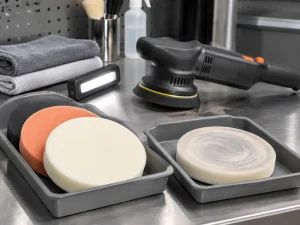
A private-label car polisher project needs more than a logo on the housing. The buyer must define the machine, supplied accessories, market requirements, packaging and approval process well enough that the sample and production order describe the same product.
The most useful starting document is a written buying specification. It gives each supplier the same questions to answer and makes differences between quotations easier to identify. Use the following checklist when preparing an RFQ, evaluating samples and agreeing the production specification.
1. Define the customer and intended application
State who will buy the tool and where it will be used. A range for mobile detailers may need different kit contents from one for fixed workshops. A retail product for mixed experience levels may require different instructions and support from a specialist professional model.
Include the destination country, sales channel, intended tasks and expected order quantity. Describe the actual applications rather than relying on broad terms such as “professional grade.” A supplier should be able to respond with a specific model and configuration.
2. Fix the machine specification
Identify the model code and drive mechanism: rotary, free-spinning random-orbital DA or forced-rotation DA. For a DA machine, specify orbit size separately from backing plate and pad dimensions.
Confirm rated electrical input, voltage, frequency, plug, speed range and what the speed unit measures. For cordless tools, add the approved battery platform, battery quantity and capacity, charger input and supplied charger model.
Record net tool weight and packed weight separately. Define whether the operating weight includes a battery or other accessories. Avoid copying a specification from a similar-looking model into the approved file.
3. Separate requested branding from confirmed capability
List the customisation you want: logo position, marking method, housing colour, labels, packaging artwork and manual language. Ask the supplier to confirm which items are available on the selected model and what each one changes commercially.
Use drawings, colour references and approved artwork files wherever possible. A screen image alone can be ambiguous. Ask whether a requested change affects materials, tooling, minimum quantity, price, documentation or lead time.
Replacing a logo is a different project from changing the housing, electronics or drive system. Describe those requests separately so that a quotation does not conceal unresolved development work.
4. Agree the complete kit and packaging
Approve a packing list with model numbers or clear descriptions for each supplied item. Include the backing plate, pads, handles, tools, batteries, charger, case and printed material as applicable.
Define retail packaging and shipping packaging separately. Confirm product labels, barcodes, language versions, carton quantities, carton dimensions and packed weight. Make sure product photography and sales copy describe the configuration customers will actually receive.
A useful RFQ separates the following decisions:
| Area | What to define | Approval record |
|---|---|---|
| Machine | Model, drive, orbit, plate and electrical configuration | Dated specification sheet |
| Branding | Logo, colours, marking locations and artwork | Approved drawings or artwork |
| Kit | Every supplied accessory, battery and charger | Itemised packing list |
| Documentation | Destination, instructions and applicable records | Model-specific document list |
| Commercial terms | Quantity, price basis, payment and delivery terms | Written quotation and order agreement |
| Quality | Sample, inspection points and change control | Approved reference and acceptance plan |
5. Review documents for the exact market configuration
Tell the supplier where the product will be sold and have the applicable requirements reviewed for that market. Ask for model-specific declarations, test reports, labels and instructions where required, including relevant battery and charger records for cordless kits.
Check that documents identify the supplied model and electrical configuration. A generic certificate image or a report for another tool does not establish that the ordered product meets your obligations.
Private labelling can also affect the responsibilities of the brand owner and importer. Confirm those responsibilities with a qualified compliance adviser for the destination market. Treat documentation review as part of purchasing approval rather than a task to leave until shipment.
6. Approve a reference sample and define acceptance
Evaluate the complete customer-ready kit, not only the bare machine. Check operation, handling, accessory fit, controls, packaging and the accuracy of the instructions against the intended use.
Record the approved configuration, sample identification and any outstanding corrections. If the approval sample differs from production materials, packaging or electrical components, document those differences before treating it as a production reference.
Agree which inspections will take place, how defects will be classified and how results will be recorded. The appropriate checks depend on the product and market; the acceptance plan should be written into the purchasing agreement rather than assumed.
7. Clarify MOQ, timing and commercial terms
Ask for MOQ by configuration. A standard-colour tool with a label change may have different commercial conditions from a customised housing or printed box.
Break the schedule into sample preparation, artwork approval, any development work, production, inspection and shipping. Define when each quoted lead time starts. A statement such as “30 days” is incomplete if the parties have not agreed whether it begins after deposit, artwork approval or another milestone.
Compare prices on the same basis. Confirm currency, included accessories, packaging, delivery term, named place and quotation validity. Do not treat an ex-factory price and a delivered price as equivalent offers.
8. Plan after-sales support and repeat orders
Agree the warranty scope, claim evidence, remedy and responsibility for associated costs. Ask which replacement parts are available and how cordless batteries and chargers will be supported.
For repeat orders, specify how component, artwork and packaging changes will be approved. Retain revision-controlled files so that later orders do not silently drift away from the approved product.
Common buyer questions
Can a buyer start with a small trial order?
Ask about the exact model and customisation level. Sample availability and trial quantities are supplier- and configuration-specific; a standard kit does not establish the MOQ for a custom project.
Does private label automatically include exclusive distribution?
No. Logo customisation does not create territorial or product exclusivity. Any exclusivity terms need a separate written agreement.
Should the first enquiry include finished packaging artwork?
It helps to describe the intended branding and language, but first confirm the available packaging format and required technical information. Final artwork should follow the approved specification and dieline.
Send an RFQ that suppliers can answer
Start with your destination market, customer type, required mechanism, electrical configuration, expected quantity and branding scope. Use the FineBuff product catalogue to identify candidate models, then send your private-label sourcing brief. Request confirmation of the available configuration, documentation, sample terms, MOQ and schedule for the specific project.
For model, logo, packaging and project-document questions, review FineBuff OEM / ODM · DA polisher range · request a quote.
Last updated: 12 November 2026